
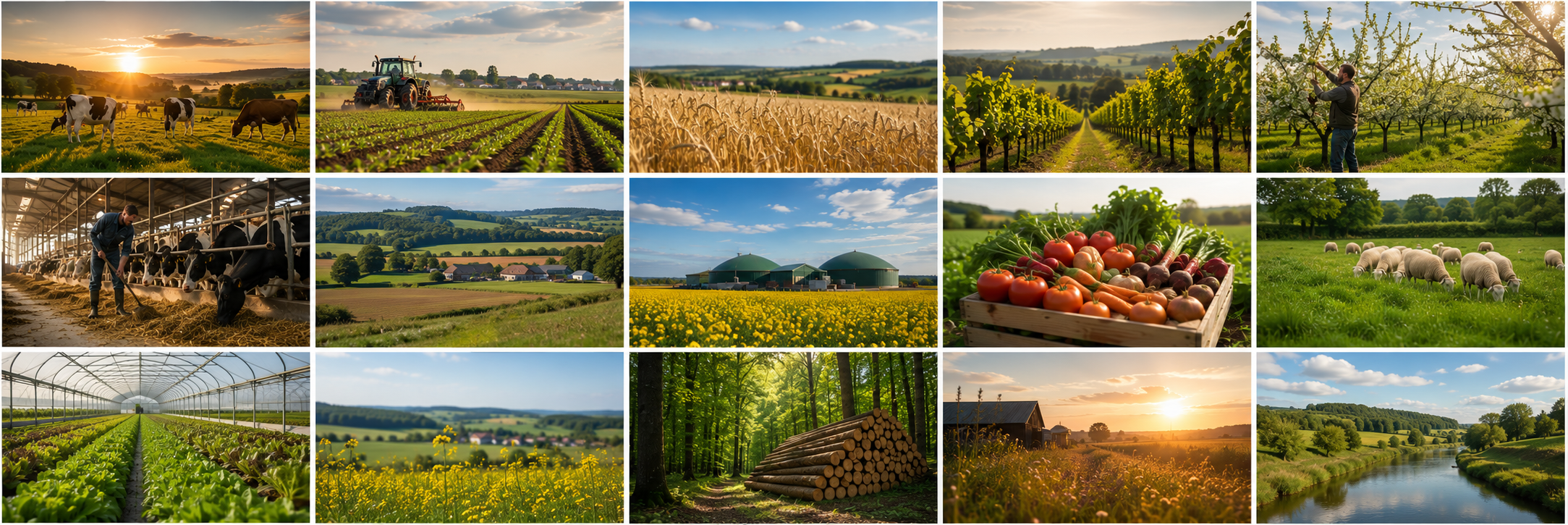
Walloon agricultural landscape illustrating the MyAgri citizen portal

MyAgri — Walloon agriculture explained

A citizen portal that translates Walloon agricultural topics into practical, verifiable and contextualized benchmarks: sectors, professions, seasons, labels, territory and food choices.

Updated on 27 June 2026 · Wallonia, Belgium

Explore sectors

Each sector links production, jobs, practical constraints, outlets and consumption choices. This page connects what is visible in the landscape with what reaches the plate.

🌾 Field crops

Cereals, potatoes and beets occupy an important place.

Issues

  • Climate risk management.
  • Soil fertility and rotations.
  • Economic stability of farms.
  • Water availability and control of inputs.

What can citizens do?

  • Favor seasonality and local origin.
  • Find out about regional processing sectors.
  • Reduce food waste to make the most of agricultural work.

🐄 Cattle and dairy farming

Livestock farming enhances the meadows and supplies the dairy and meat sectors.

Issues

  • Animal welfare and farmer income.
  • Fodder autonomy and production costs.
  • Reduction of the environmental footprint.
  • Transmission of farms and renewal of generations.

What can citizens do?

  • Discover quality labels and procedures.
  • Support farmer points of sale.
  • Compare the origin of dairy and meat products to encourage local sectors.

🥕 Market gardening, horticulture and orchards

Local productions adapted to short circuits.

Issues

  • Labor, storage and logistics.
  • Irrigation and adaptation to heat waves.
  • Commercial valuation in direct sale.
  • Access to local land for new market gardeners.

What can citizens do?

  • Buy directly from producers.
  • Diversify your basket with seasonal products.
  • Plan your weekly menus to support regular local consumption.

🍇 Diversification (small fruits, hops, viticulture)

Emerging sectors create local value and strengthen the resilience of farms.

Issues

  • Initial investments and technical support.
  • Structuring local and tourist outlets.
  • Management of health and climate risks.
  • Development of processing and marketing skills.

What can citizens do?

  • Discover processed local products (juice, beer, wine, jams).
  • Visit the farms which open their workshops to the public.
  • Choose food gifts from regional producers.